
Fitscope Studio
January 9, 2026, 1 min
Elliptical HIIT vs Steady State: Which Delivers Better Results Over Time
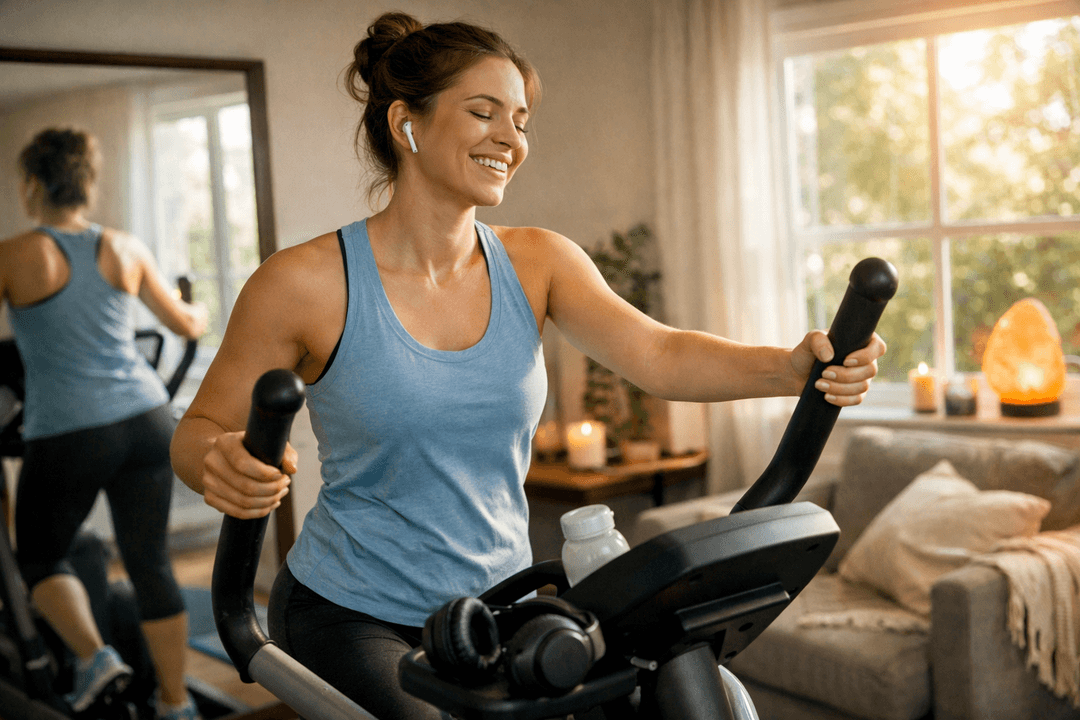
Elliptical machines offer two distinct cardio styles: high-intensity interval training (HIIT) and steady-state workouts. These elliptical cardio types cater to different goals and experiences, leading many fitness enthusiasts to wonder which delivers better results over time. In this comparison of elliptical HIIT vs steady state, we’ll explore how each approach impacts your fitness, fat loss, and enjoyment. By the end, you’ll know exactly how to leverage both styles of elliptical workouts for maximum results, sustainability, and variety in your routine.
What is Elliptical HIIT?
Elliptical HIIT involves short bursts of all-out effort followed by brief recovery periods, repeated for a time-efficient, intense workout. For example, you might pedal at maximum resistance and speed for 30 seconds, then ease into a slow pace for 1–2 minutes, and repeat. These intervals push your heart rate to around 80–90% of its max, mimicking sprint-style efforts on a low-impact machine. An HIIT session on the elliptical is typically shorter (15–30 minutes) because you’re packing a lot of work into a small time window. The payoff? You torch calories in a fraction of the time it would take at a steady pace, making HIIT ideal for time-crunched days or anyone who wants a quick, challenging sweat.
Elliptical HIIT shines when it comes to boosting fitness and breaking through plateaus. The intense intervals engage both aerobic and anaerobic energy systems, which can improve your cardiovascular capacity and work capacity more broadly research suggests HIIT and steady-state cardio may offer similar improvements in measures like VO2 max over time. You’ll also experience the famed “afterburn effect” (excess post-exercise oxygen consumption), where your metabolism stays revved up even after you’ve finished working out. Many exercisers love that sweaty, accomplished feeling HIIT provides in just minutes. And with the elliptical’s adjustable resistance and incline, you can make each interval as intense as you’re able, without the joint pounding of running.
That said, HIIT on the elliptical isn’t without drawbacks. Those intense bursts are hard — you’ll be breathless and pushing your comfort zone. This can be daunting if you’re new to exercise or coming back from a break. It’s wise to have a base level of cardio fitness before jumping into all-out intervals. Because HIIT is so intense, you also need more recovery time between sessions (doing HIIT daily is a fast track to burnout). Start with 1–3 HIIT workouts per week, spaced out with easier days in between. Remember that quality beats quantity here. When you go hard, really go for it, then give yourself permission to rest. If you have any cardiovascular or joint concerns, consult a professional or modify the intervals to suit your needs. The goal is to challenge yourself safely and keep it fun – think quick races on your elliptical where you’re victorious at the finish line!
What is Steady State Elliptical?
Steady-state elliptical workouts are the classic cardio sessions most people recognize – you settle into a consistent pace and maintain it for an extended period (usually anywhere from 20 minutes up to an hour or more). Instead of spiking your heart rate with sprints, you’ll cruise in a moderate intensity zone, roughly 50–70% of your maximum heart rate. On a perceived effort scale, steady-state feels like a 4 or 5 out of 10: you’re working hard enough to break a sweat and breathe heavier, but you can still hold a conversation in brief sentences. Many people find this pace comfortable and even relaxing – it’s the kind of workout where you might put on a playlist or even watch a show while gliding on the elliptical.
Steady-state elliptical training is popular because it’s accessible and effective for a wide range of fitness levels. It emphasizes the aerobic energy system, training your heart, lungs, and muscles to use oxygen efficiently over time. The result is improved endurance – you build a strong cardiovascular base that allows you to exercise longer and perform daily activities with less fatigue. Because the intensity is lower, steady-state workouts put less acute stress on your body. There’s minimal joint impact (especially on the elliptical), and you typically won’t feel wiped out afterwards. In fact, steady sessions can aid in recovery by boosting circulation without overloading your muscles. Many exercisers use moderate elliptical rides on active rest days to get the blood flowing and ease soreness.
Another big benefit of steady-state cardio: it’s mentally approachable and easy to stick with. On days when you’re not up for a killer workout, knowing you can hop on the elliptical and move at a comfortable pace is reassuring. These workouts can even be enjoyable “me time” – a chance to clear your head, listen to music, and get those feel-good endorphins. Over time, regular steady-state exercise can improve your heart health, help regulate stress, and contribute to weight management. No wonder the steady-state approach has stood the test of time!
Of course, there are a few cautions with the steady ride. To get significant calorie burn and fitness gains, you’ll need to devote more time compared to HIIT. A leisurely 15-minute pedal won’t do as much as a high-intensity 15-minute interval blast, so steady-state tends to require longer sessions (think 30–60 minutes+) for comparable benefits. Some people also find doing the same pace can become monotonous after a while – if every workout is identical, motivation can dip. To avoid plateaus and boredom, it’s smart to vary your steady workouts by adjusting resistance or trying new programs. And while the risk of sudden injury is low, repetitive motion over many sessions could lead to overuse niggles if you never change things up. The solution? Mix in variety and listen to your body. Steady-state elliptical training will reward you with a strong aerobic foundation and countless calories burned, especially when you stay consistent.
Key Differences in Physiology and Performance
Elliptical HIIT and steady-state workouts both improve your fitness, but they go about it in different ways. Here’s an easy breakdown of how they contrast:
- Intensity & Heart Rate: HIIT intervals drive your heart rate sky-high (often 80–90%+ of max) during work periods, then drop during rest. Steady-state keeps your heart rate in a moderate, stable range (about 60–70% of max) throughout. HIIT feels like sprinting; steady feels like a brisk, sustainable jog.
- Energy Systems: During HIIT, you tap into anaerobic energy pathways – your muscles burn through stored carbohydrates for quick energy, producing that burning sensation as lactate builds up. In steady-state, you’re primarily using aerobic metabolism, burning a mix of fat and carbs with ample oxygen. This trains your body to become an efficient oxygen-delivery machine over time.
- Calorie Burn & Afterburn: Minute for minute, HIIT torches more calories than steady exercise and kicks up a post-workout calorie burn (EPOC) that can last for hours as your body recovers. Steady-state burns calories more slowly per minute and has little afterburn, but you can sustain it longer. Over a longer session, a steady elliptical workout can catch up in total calories burned. In short, HIIT is a calorie bomb in short bursts, whereas steady-state is a steady flame you keep burning longer.
- Muscle Fiber Recruitment: HIIT’s explosive efforts call upon your fast-twitch muscle fibers – the ones responsible for power and speed. These fibers tire quickly but have high output, which is why you can only sprint for so long. Steady endurance rides rely on slow-twitch muscle fibers that are built for efficiency and endurance. Over time, steady training can increase your slow-twitch fiber efficiency, helping you go farther with less effort.
- Recovery Time: Because HIIT is so intense, it imposes greater stress on your muscles and nervous system. You’ll likely feel a bit more soreness or fatigue afterwards and need a day or two to fully bounce back. Steady-state is gentler; your heart and muscles recover quickly, meaning you can do steady workouts more frequently. This difference is why many athletes schedule just 2 HIIT days per week, but may include several steady cardio days.
Physiologically, neither HIIT nor steady-state is “better” across the board – they simply excel in different areas. Interestingly, exercise science has found that both approaches can lead to similar improvements in key fitness markers when volume is matched. One study noted that eight weeks of HIIT and eight weeks of steady training produced equivalent gains in participants’ aerobic power and endurance capacity. Your body can adapt and get stronger with either style. The best choice depends on which stimulus you need more of and how it fits your life. If you want to push your peak performance and save time, elliptical HIIT provides a potent dose of training stress. If you’re building an aerobic base or prefer longer, easier workouts, steady-state is your friend. Understanding these differences helps you use the right tool for the right job on your fitness journey.
Fat Loss Considerations Over Time
When it comes to burning fat, elliptical HIIT vs steady state for fat loss is a hot topic. You’ve probably heard conflicting claims: one camp swears HIIT incinerates fat thanks to its intensity and afterburn, while another camp praises steady-state as the optimal “fat-burning zone.” The truth lies somewhere in the middle. Physiologically, high-intensity workouts do burn more calories per minute and can particularly deplete carbohydrate stores, which encourages your body to tap into fat for recovery fuel post-workout. Steady-state cardio, on the other hand, does utilize a higher percentage of fat for fuel during the workout (since it’s aerobic), but the overall calorie burn is lower per minute. In practice, the biggest factor in fat loss is the total calorie deficit you create over time. Both HIIT and steady elliptical sessions can contribute significantly to your weekly calorie burn, so the “better” method is the one that helps you consistently stay active and in control of your diet.
For some people, that’s HIIT – short, intense elliptical HIIT sessions that fit a busy schedule can efficiently burn calories and may even suppress appetite briefly (nothing like a hard sprint to put eating out of mind for a bit!). HIIT has also shown promise in reducing abdominal fat specifically, possibly due to hormonal responses to intense effort. However, HIIT’s downside is you can only do it a couple of times a week. If you try to do a 20-minute HIIT every single day, you risk exhaustion or injury, which could actually set back your fat loss by forcing you to rest more. Others find steady-state cardio more sustainable: you might happily spend 30–45 minutes on the elliptical most days, accumulating a large calorie burn through sheer consistency. True, you won’t get a big afterburn effect from those moderate sessions, but if you enjoy them, you’ll do them more often. Over weeks and months, consistency beats intensity if intensity isn’t sustainable for you.
The key is to avoid an all-or-nothing mindset. Despite the myth of a magical “fat-burning zone,” higher-intensity work ultimately burns more total calories and even boosts your metabolism after exercise, which aids fat loss. But long, steady workouts can absolutely help you drop pounds too, especially when paired with a healthy diet. In fact, many successful weight-loss programs include a mix of both: interval training to ramp up calorie expenditure and fat oxidation, and steady-state to build endurance and keep you active on days between hard workouts. If your primary goal is fat loss, choose the approach that you can stick with and recover from. You might find that on busy weekdays a quick interval blast is perfect, whereas weekends are great for a longer, enjoyable elliptical cruise. By alternating the two, you maximize your calorie burn while giving your body time to heal – a win-win for fat loss.
Mental Engagement and Workout Enjoyment
Beyond the raw numbers, exercise has to be enjoyable (or at least engaging) enough to keep you coming back. Here’s where the mental side of interval vs steady elliptical workouts comes in. In terms of perceived effort, HIIT definitely feels harder. Those high-intensity intervals demand focus, grit, and a willingness to get uncomfortable. Some people absolutely thrive on this – they love the adrenaline rush and the feeling of pushing past limits. For these folks, a 20-minute HIIT on the elliptical is exciting and rewarding, never boring. The constant changes (speed up, slow down, increase resistance, recover, and repeat) keep their mind engaged. When the workout is over, they feel a big sense of accomplishment. However, if you’re someone who dreads that all-out effort, the mental hurdle of starting a HIIT session can be significant. It might be easier to motivate yourself for a gentler steady ride than to face a series of sprints.
Steady-state workouts are often perceived as easier in the moment – they’re physically less intense and mentally more relaxed. You can often zone out or get into a rhythmic “flow” on the elliptical during a steady session. Many people find this almost meditative or therapeutic, using the time to de-stress. The downside is that doing the same motion at the same pace for a long period can become monotonous for certain personality types. If you easily get bored, a 45-minute steady elliptical session might feel like it drags on forever unless you have something to entertain you (music, podcasts, or a good TV show can be great companions). On the flip side, HIIT’s built-in variety tends to prevent boredom – you’re too busy counting down the seconds to the next interval or adjusting resistance to get bored!
Personality and preference play a huge role. Are you an “adrenaline junkie” who craves challenge and novelty? You’ll likely find HIIT more enjoyable and satisfying. Do you prefer a calm, steady routine that you can perform without excessive strain? Steady-state will be more your speed. Neither preference is wrong – it’s about what makes you feel good during and after the workout. It’s also worth noting that mood benefits come from both styles. Steady-state cardio is known to release a steady stream of endorphins, dopamine, and serotonin, boosting your mood and reducing stress (those feel-good hormones we love). HIIT can also trigger an endorphin high; some people feel an almost euphoric state after a tough interval session. However, if the process of HIIT is too unpleasant for you, that after-glow might not be enough incentive.
In terms of sticking to a program long-term, enjoyment is a huge predictor. Consistency is king in fitness, so choose the elliptical workout style that you don’t mind doing regularly. You might also find that mixing both helps with mental engagement: the novelty of an interval session one day and the comfort of a steady ride another day can keep your routine fresh. There’s less chance of burnout from HIIT (both mental and physical) when you intersperse it with easier days. Likewise, there’s less chance of dying of boredom from the same long cardio every day when you know a fun interval workout is coming up. Use your natural preferences as a guide, but don’t be afraid to step outside your comfort zone occasionally – you might be surprised at how your tastes evolve as your fitness improves!
When to Use Each Type of Workout
So, how do you decide on a given day whether to do a heart-pumping HIIT or a steady endurance ride on the elliptical? It boils down to your goals, schedule, and how your body feels. If you’re aiming to improve your speed, power, or overall conditioning – or if you’re short on time – an elliptical HIIT workout is the go-to. For example, on a busy morning before work, a quick interval session can give you maximum benefit in minimal time. You’ll elevate your heart rate, challenge your muscles, and be done in, say, 20 minutes. (In fact, FitScope offers a 20-minute Elliptical class that’s perfect for those time-crunched days when you want an intense calorie burn without spending an hour in the gym.) Use HIIT when you want to break through a fitness plateau as well – the high intensity can shock your system into adapting further, whether that means improving your VO2 max or helping overcome a weight-loss stall. Just remember to schedule recovery after; if you did a hard HIIT today, tomorrow might be better suited for light cardio or rest.
On the other hand, steady-state elliptical workouts are ideal for different scenarios. If you’re looking at a recovery day or you’re feeling a bit sore from strength training, a moderate steady ride is a great choice to stay active without overtaxing yourself. Steady workouts are also fantastic for building endurance – if you have goals like completing a long-distance race (or you simply want to increase your cardio capacity), spending longer sessions in that aerobic zone is key. Use steady-state when you have the time to settle into a groove and you want a low-stress, feel-good workout. Many people love a steady elliptical session in the morning to energize the day or in the evening to unwind. If you’re someone who likes to multitask, steady-state is your friend too – you can catch up on a podcast or even answer emails (carefully!) while your legs keep moving at a comfortable clip. In summary, pick HIIT for intensity and efficiency, and pick steady state for endurance and active recovery. Both have a rightful place in a well-rounded weekly routine.
To visualize a balanced approach, imagine a sample week: You might do an interval-focused elliptical workout on Monday, enjoy a gentle steady ride on Tuesday, tackle another HIIT session on Thursday, and go for a longer steady-state cardio on Saturday, with strength training or rest days in between. By alternating like this, you’re matching the workout type to your goal for that day (be it calorie-torching, building stamina, or just getting moving) and giving your body a chance to benefit from each method.
Blending Both for Long-Term Results
If you really want to maximize results over time, the secret sauce is periodization and variety – in other words, blending both HIIT and steady-state into your training plan. Think of it like a well-balanced diet for your fitness: HIIT is the spicy, intense flavor that boosts your metabolism and performance, while steady-state is the hearty, sustaining staple that you can rely on regularly. When combined, they complement each other perfectly. Incorporating both prevents your body from getting too accustomed to one type of stimulus. This means you continue to make progress without hitting a wall. For example, during certain weeks you might focus more on building your aerobic base with steady workouts, then sprinkle in HIIT sessions to kick things up a notch. Other weeks when life is busy, you might lean on shorter HIIT workouts and treat longer steady sessions as a bonus when time allows. This ebb and flow keeps you improving while also respecting that our bodies have ups and downs.
Another reason mixed programming works is injury prevention and recovery management. Alternating tough interval days with gentler steady days can reduce the risk of overuse injuries and extreme fatigue. The low-impact nature of the elliptical already helps on this front, but varying intensity adds an extra layer of joint-friendliness. You’ll strengthen your heart and muscles in different ways: intervals might improve your power and engage more muscles (including your upper body if you pump those elliptical arms hard), while steady rides build resilience and efficient circulation. Over time, people who combine both often see well-rounded fitness gains – they can go fast and go far.
If you’re not sure how to structure this on your own, don’t worry. FitScope’s guided programs and classes are designed to give you the best of both worlds. Our coaches often mix intervals and steady efforts within a week’s schedule to keep workouts fresh and effective. For instance, you might try an Elliptical Bootcamp class that alternates between high-intensity spurts and moderate cruising, or follow one of our training plans that intelligently blends cardio intensities. Variety is built in, so you’re constantly challenging your body in new ways. Over the long term, this kind of periodized training helps you avoid plateaus – when one system gets a break, the other is being developed, and vice versa. Plus, it’s just more fun! You’ll never get stuck in a rut if Monday’s workout is different from Wednesday’s.
Final Takeaway
When weighing elliptical HIIT vs steady state, the real question isn’t which one is “better” in absolute terms – it’s which is better for you and how can you harness both to feel your best. HIIT and steady-state each deliver unique benefits, and the magic truly happens when you use them in tandem. Don’t feel like you have to pick a side; in fact, most people find their sweet spot by doing a bit of each. Listen to your body and your mind: on days you’re fired up and short on time, go for that exhilarating interval session. On days you crave something gentler or longer, settle into a steady rhythm and enjoy the ride. Over time, this balanced approach will lead to superior results – better fitness, more fat loss, and a happier you – precisely because it’s sustainable and adaptable.
The bottom line: variety wins. By experimenting with both intense intervals and easy steady strides, you’ll discover what mix helps you reach your goals and keeps you motivated. Your fitness journey is a marathon, not a sprint (no pun intended), and it should be enjoyable as well as effective. So next time you hop on the elliptical, consider what your body needs that day and embrace both styles as tools in your arsenal. And if you need guidance or fresh ideas, check out FitScope’s elliptical workouts – from heart-pumping HIIT classes to feel-good endurance sessions, we’ve got you covered. Now, go forth and stride your way to success, one interval and one steady groove at a time!

Commercial Subscription
Allows Fitscope classes to be used in a commercial gym or boutique studio (1 location) with up to 500 members. Multiple simultaneous users enabled. Lets Talk!

© Fitscope Technologies LLC, 2023
Powered by  Fitcaster