
Fitscope Studio
March 16, 2026, 1 min
How Large Brands Outsource Part of Production Without Losing Control
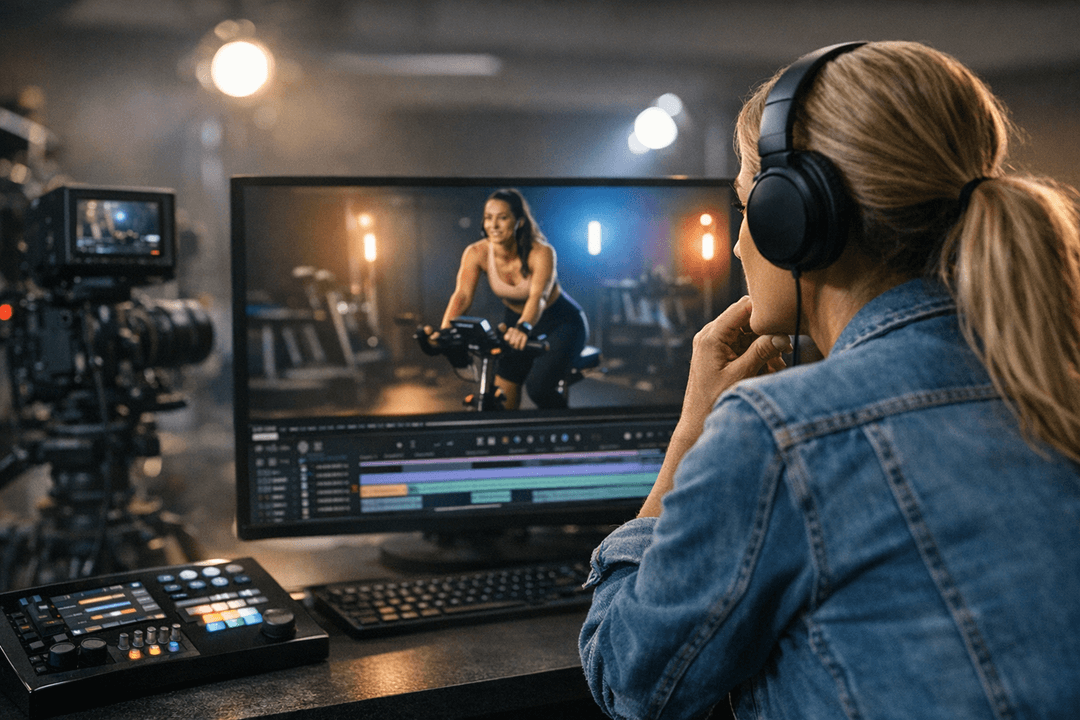
Most fitness brands that outsource production do not hand over everything. They hand over the parts that are hardest to scale internally (filming, editing, talent management, facility operations) while keeping the decisions that define how the brand looks, sounds, and feels. The challenge is not whether to outsource. It is how to outsource without the final product drifting away from the standard you have spent years building.
This article is written for equipment OEMs, connected-fitness platforms, and enterprise fitness brands that are considering outsourcing some or all of their content production to an external studio. It walks through the operational mechanics of doing this well: what to standardize before a single frame is shot, how to replicate a set in a new facility, how to run a remote review workflow that actually catches problems, and how to structure governance so decisions happen quickly without sacrificing brand integrity.
Partial Outsourcing vs. Full Outsourcing and Why the Distinction Matters
The outsourcing conversation usually starts as a binary: do it yourself or give it to someone else. In practice, the most effective model for large fitness brands sits between those two extremes. Partial outsourcing means the brand retains ownership of creative strategy, brand standards, programming direction, and final approval authority, while delegating production execution (filming, post-production, talent coordination, facility operations, and delivery) to an external partner.
Full outsourcing, by contrast, transfers both creative direction and production execution to the vendor. This model can work for small brands building a library from scratch, but it introduces significant risk for established brands with existing visual identities, trained audiences, and content libraries that need to feel like a seamless extension of what already exists. When a viewer can tell that last month's cycling class was shot by a different team than this month's, the brand has a consistency problem that no amount of post-production polish can fix.
Partial outsourcing works because it preserves the internal team's role as the quality standard-setter while giving the production partner enough operational latitude to move quickly. The brand defines what the content should look and feel like. The studio builds the infrastructure to produce it at pace. This division of labor mirrors how the most successful outsourcing relationships work across industries. Professional production partners maintain brand consistency through structured onboarding, detailed style guides, and multi-layered review protocols that prevent drift without slowing down delivery.
The key to making partial outsourcing work is documentation. Every standard that lives only in someone's head is a standard that will eventually be violated. Before production begins, the brand team's job is to translate institutional knowledge into a written production bible that an external team can follow without guessing. That means documenting how you light your set, why you frame the instructor a certain way, what your audio levels sound like, and which on-screen graphics are required.
This production bible becomes the governing document for the entire relationship. It is not a brand guidelines PDF with logo usage rules and hex codes. It is a technical operations manual specific to content production: lighting diagrams, camera maps, audio specifications, graphics templates, talent standards, and approved reference content that the studio can use as a benchmark. The more precise the bible, the less interpretation the production partner needs to apply, and the less room there is for drift.
What Must Be Standardized Before You Outsource a Single Frame
Brand consistency in fitness video is not abstract. It is the sum of specific, measurable production elements that either match or they do not. When outsourcing to an external studio, the following elements need to be locked down, documented, and shared as reference standards before pre-production begins.
Lighting, Camera, and Audio Standards
Lighting is the single most visible element of brand consistency in fitness content. Viewers may not be able to articulate why two videos feel different, but mismatched color temperature, shadow direction, or exposure levels register instantly as discontinuity. The production bible should specify key light position and type (LED panel, softbox, Fresnel), color temperature in Kelvin, fill ratio, any practical or accent lighting, and the brand's approach to background exposure. Reference frames pulled from approved content are more useful than written descriptions alone.
Camera settings and angles require the same precision. Specify the number of cameras, their positions relative to the talent and equipment, lens focal lengths, aperture range, frame rate, resolution, and color profile. For fitness content filmed on heavy equipment, camera placement is particularly important because it determines whether viewers can see the form cues that make the content instructionally valuable. A cycling class shot only from the front misses pedal stroke mechanics. A rowing class without a lateral angle loses the drive sequence. These are functional requirements that the production partner needs to replicate exactly, not stylistic preferences.
Audio standards should define microphone type and placement (lavalier, boom, or both), target levels for voice and music, the acceptable noise floor, and how music beds are mixed relative to coaching cues. In fitness content, audio is arguably more important than it is in standard corporate video because the instructor's verbal pacing drives the workout. If the external studio delivers content where coaching cues are buried under the music bed or room tone is noticeably different from the brand's existing library, the mismatch will be obvious to subscribers who watch multiple classes per week.
Graphics, Lower Thirds, and On-Screen Data
Motion graphics packages (intro sequences, lower thirds with instructor names and class information, metric overlays, countdown timers, end cards) must be delivered to the production partner as templated project files, not as verbal descriptions. Specify font families, sizes, colors (with exact hex or RGB values), animation timing, placement coordinates, and any rules about when graphics appear and disappear relative to class structure. If the brand uses on-screen performance data such as RPM, watts, or heart rate zones, define exactly how that data is displayed, what thresholds trigger visual changes, and how the overlay interacts with the underlying video frame.
How to Replicate a Set in a New Facility
Set replication is where partial outsourcing gets operationally complex, and where many brand-studio relationships fail in the first 90 days. The goal is not to build an identical room. It is to ensure that the camera's frame looks identical to what the audience already knows.
Start with a detailed measurement package of the existing set. This includes floor dimensions, wall-to-camera distances, ceiling height, the exact placement of every piece of equipment relative to the camera positions, and the distances between machines. Document the flooring material, color, and texture, because floor appearance occupies a significant portion of the frame in most fitness content and a mismatch will be visible. Record wall color, finish (matte, satin, gloss), and any branded elements such as logos, accent panels, or neon signage. Photograph every surface and material at the angles the camera will see them from.
Build a camera map: a scaled overhead diagram showing each camera's position, height, angle, and lens field of view. Include the instructor's mark (where they stand or where the equipment is placed) and any blocking positions for multi-talent shoots. This map is the single most important document in the replication process because it allows the production partner to work backward from the frame to the physical layout. If the camera map is accurate and the lighting rig matches the reference, the output will look consistent even if the room itself is a different shape or size.
Material matching is the detail that separates a professional replication from an obvious mismatch. Rubber flooring comes in different thicknesses, textures, and colors that look identical in a catalog but diverge on camera. Wall paint shifts under different lighting conditions. Equipment upholstery fades or changes color between manufacturing runs. When replicating a set, order physical samples and test them under the specified lighting rig before committing. A single on-camera test day, shooting reference footage and comparing it side by side with existing content, costs far less than reshooting an entire batch of content after delivery because the floor looked wrong.
Equipment placement is another area where small deviations create visible inconsistency. If the brand's existing content shows a treadmill positioned three feet from the left edge of frame with a specific background element visible behind the right shoulder, the external studio needs to replicate that spatial relationship precisely. A six-inch shift in machine placement can change the entire composition. This is why the camera map (not a general floor plan, but a shot-specific diagram tied to each camera position) is the most operationally important document in the replication package.
For brands producing content across multiple equipment types, replication complexity increases with each format. A cycling class, a rowing class, and a functional trainer session may all require different machine positions, different camera heights, and different lighting adjustments to account for the talent's range of motion. The production bible should include format-specific setup sheets that document these variations so the studio can reconfigure between shoots efficiently without re-inventing the setup each time.
Pre-Production Alignment Between Brand and Studio
The pre-production phase is where brand control is either established or lost. A thorough alignment process before filming begins prevents the most expensive category of production failures: content that is technically competent but stylistically wrong.
The alignment process should begin with a comprehensive brand transfer session. This is not a slide deck presentation. It is a working session where the brand team walks the production partner through the existing content library, explains the reasoning behind key production choices, and identifies the non-negotiable elements versus the areas where the studio has creative latitude. Some brands care deeply about instructor wardrobe and will provide approved apparel. Others care more about coaching language and will require scripts or shot-by-shot outlines. The studio needs to know which elements carry the most weight so they can allocate quality-control attention accordingly.
From that session, the production partner should produce a pre-production alignment document that covers every dimension of the upcoming shoot. At minimum, it should include:
- A content calendar with class types, durations, and target delivery dates
- A confirmed equipment list with model numbers and placement specifications
- Talent assignments with wardrobe, grooming, and coaching-style standards
- A shot list or storyboard for each class format
- Music guidelines including tempo ranges, genre preferences, and licensing requirements
- The complete graphics and overlay package with version numbers
The brand team reviews and approves this document before any shoot date is scheduled. Changes after this point should follow a formal change-order process to prevent scope drift and protect the timeline.
Running a Remote Review Workflow That Actually Works
When production happens at an external facility, the brand team cannot be on set for every shoot. Remote review workflows bridge that gap, but only if they are structured with clear checkpoints, defined turnaround times, and unambiguous approval authority.
Dailies and On-Set Check-Ins
The most effective remote review model borrows from film and television production: dailies. At the end of each shoot day (or at a scheduled midpoint for multi-class days), the production team uploads select clips, typically the first 60 to 90 seconds of each class plus any segments where they deviated from the shot list or encountered a technical issue. These are not rough cuts. They are raw or lightly graded samples that allow the brand team to verify lighting, framing, audio quality, talent performance, set appearance, and wardrobe before the full edit begins.
Dailies review should happen within 24 hours. If the brand team identifies a problem (the fill light is too warm, the instructor's mic is peaking on high-effort intervals, the equipment placement has shifted from the camera map), the studio can correct it on the next shoot day rather than discovering the issue three weeks later during post-production review. This single practice eliminates the majority of costly reshoots.
Feedback Rounds and Final Approval
Post-production review should follow a structured cadence. Industry standard is two to three formal feedback rounds, with the scope of feedback narrowing at each stage. The first round addresses structural issues: class pacing, segment order, coaching content accuracy, and overall energy. The second round focuses on polish: graphics placement, color grade consistency, audio mix levels, and caption accuracy. A third round, if needed, is limited to final tweaks rather than wholesale creative changes.
Use a frame-accurate review platform (Frame.io, Wipster, or equivalent) rather than email chains or spreadsheets. Time-coded comments eliminate ambiguity. Telling a studio "the transition at 14:32 needs to be tighter" is actionable in a way that "the middle section feels slow" is not. Define who on the brand side has approval authority and ensure that person provides consolidated feedback rather than allowing multiple stakeholders to submit conflicting notes. A single approval voice on the brand side and a single point of contact on the studio side is the governance structure that moves fastest with the fewest errors.
One pattern that undermines even well-structured review workflows is late-stage creative redirection. When a brand stakeholder who was not involved in pre-production alignment surfaces during the second feedback round and requests changes that contradict the approved shot list or programming document, the production timeline collapses. Preventing this requires locking the approval chain before the pilot begins and treating the pre-production alignment document as a binding creative brief. Revisions refine the execution of the agreed plan. They do not reopen the plan itself.
Coach and Talent Standards for Consistent Content
On-camera talent is the most visible element of brand identity in fitness content. Viewers build loyalty to specific instructors, and the coaching style (verbal pacing, motivational language, cueing approach, energy level) becomes inseparable from the brand itself. When outsourcing production, talent standards require as much documentation as technical standards.
Start with certification requirements. If the brand's content features coaches on commercial gym equipment, those coaches should hold relevant credentials (NASM, ACE, NSCA-CSCS, or equivalent) and be able to demonstrate equipment safely and credibly. Specify whether the production partner sources talent or the brand provides its own roster. If the studio is sourcing, define the audition process, who approves final selections, and what usage rights the brand receives. Perpetual worldwide rights across all channels, including app, web, social, in-facility display, dealer distribution, and connected-equipment consoles, should be negotiated before filming begins, not after.
Wardrobe and grooming standards should be documented with visual references. Specify approved colors, logos that can and cannot appear on screen, footwear requirements, and any brand-provided apparel. Minor details like a coach wearing a competitor's sneakers, a visible smartwatch from a non-partner brand, or jewelry that creates audio interference with a lavalier mic are the kinds of issues that are trivial to prevent in pre-production and expensive to fix in post.
Coaching style is harder to standardize than wardrobe but equally important for brand consistency. Some brands want high-energy, motivational coaching with frequent verbal encouragement. Others want calm, technique-focused instruction with minimal filler language. Some require specific cueing frameworks, such as calling out RPM targets at precise intervals during a cycling class or referencing heart rate zones by name rather than by number. If the brand has a coaching playbook, share it with the production partner and the talent before the first shoot. If no playbook exists, building one is a worthwhile investment before outsourcing begins, because inconsistent coaching across a content library fragments the viewer experience in ways that no amount of visual consistency can compensate for.
Quality Assurance Before Final Delivery
A quality assurance review is the last checkpoint before content enters the brand's library. It should be systematic, not subjective. The QA process works best when it follows a standardized checklist that covers every deliverable element, reviewed by someone other than the person who edited the content.
The checklist should verify that:
- Video resolution, codec, and frame rate match the delivery specification and remain consistent throughout
- Color grade matches the approved reference with no visible drift between segments
- Audio levels for voice, music, and effects hit the specified targets with no dropouts, pops, or distortion
- All graphics and overlays are correctly positioned, spelled accurately, and timed to the class structure
- Talent wardrobe complies with the approved standard and no unauthorized branding or logos are visible
- The class structure matches the approved programming document
- The file is named according to the brand's convention and delivered in the correct format
File delivery specifications deserve particular attention. Define the container format (MP4, MOV), codec (H.264, H.265, ProRes), resolution, bitrate, and audio configuration (stereo, 5.1). Specify whether the brand requires separate stems (isolated music, isolated voice, mixed master) for future localization or re-editing. Define the naming convention, which should include class type, instructor name, duration, difficulty level, equipment, and a unique identifier, along with the delivery method (cloud transfer, hard drive, direct upload to a CMS or platform). Consistent naming and delivery practices reduce confusion and prevent the operational friction that quietly erodes production partnerships over time.
Starting With a Pilot Shoot to Validate the Match
No amount of documentation replaces seeing actual output. Before committing to a multi-month production relationship, run a paid pilot shoot. The pilot serves two purposes: it tests whether the production partner can replicate the brand's look and feel from the production bible alone, and it reveals the gaps in the documentation itself.
Scope the pilot as a realistic miniature of the full engagement, not a single demo video but a batch of three to five classes that represent the range of formats the brand produces. Include at least two equipment types, two coaches, and two class durations. This forces the studio to demonstrate workflow efficiency, talent management, and post-production consistency across variables, not just the ability to nail one carefully staged sample.
Evaluate the pilot against the same QA checklist that will govern the full engagement. Compare pilot deliverables directly against existing library content, ideally by viewing them back to back on the same screen, at the same resolution, with the same playback settings. If a subscriber would not notice the transition between old and new content, the pilot has passed. If the difference is noticeable, identify exactly which elements need adjustment before scaling up. The pilot is the cheapest place to find and fix problems. Once a monthly production cadence begins, the cost of mid-stream corrections multiplies quickly.
Governance: Who Owns Decisions and Timelines
The fastest production relationships are the ones with the clearest decision rights. Ambiguous governance, where multiple brand stakeholders can insert feedback at any stage and approval authority shifts depending on who is available, slows everything down and introduces inconsistency.
Define a governance structure at the start of the relationship. On the brand side, assign a single production owner who has final approval authority on content, scheduling, and talent decisions. This person does not need to make every decision personally, but they need to be the tiebreaker when conflicting feedback arises. On the studio side, assign a dedicated producer who serves as the primary point of contact, manages the internal team, and escalates issues to the brand owner when needed.
Establish a shared production calendar with locked dates for pre-production alignment, shoot days, dailies review, feedback rounds, and final delivery. Build buffer into the calendar for revision cycles (typically three to five business days per round) and agree on what happens when a deadline is missed on either side. The most common source of production delay is not studio incompetence; it is slow brand-side feedback. A governance agreement that holds both parties to defined turnaround times prevents the cascading delays that push delivery dates and strain the relationship.
Finally, define intellectual property ownership, revision limits, and scope-change protocols in a written agreement before the pilot begins. Who owns the raw footage? How many revision rounds are included in the base fee? What constitutes a revision versus a scope change? What is the cost and timeline for additional revisions? These are operational details, not legal formalities, and getting them right up front prevents the friction that derails otherwise productive partnerships.
Building a Production Partnership That Scales
Outsourcing part of your production is not a concession. It is an operational decision that, when structured properly, lets your brand produce more content, at a higher cadence, with greater consistency than most internal teams can sustain alone. Industry data suggests that roughly 72 percent of companies now use a combination of outsourced and in-house talent for video production, a hybrid model that reflects the practical reality of scaling content without scaling headcount at the same rate.
The brands that do this well share a common pattern. They invest heavily in documentation before production begins. They treat the pilot as a real evaluation, not a formality. They assign clear decision rights. They review dailies promptly. And they build the relationship around process rather than personality, so that when team members change on either side, the production quality does not change with them.
The result is a content operation that feels internal to the viewer but runs on the infrastructure, expertise, and facility of a dedicated production partner. That is the model that scales.
For some brands, the path to outsourcing begins not with custom production but with licensing. Licensing an existing library of professionally produced, equipment-specific fitness content gives brands a baseline to study — a reference for production quality, coaching style, and format variety — before investing in a custom production relationship. It also fills the content gap immediately while a longer-term production strategy takes shape. Whether you start with licensing, custom production, or a combination of both, the operational principles are the same: document your standards, test before you commit, govern with clarity, and build a relationship that compounds in quality over time.
About Fitscope
Fitscope is an LA-based fitness content studio that specializes in equipment-based workout production. We operate a dedicated production facility with commercial-grade machines permanently staged and camera-ready, covering cycling, rowing, treadmill, elliptical, functional trainers, and more. Our team handles end-to-end production, from program design and talent casting through filming, post-production, quality assurance, and multi-format delivery.
We work with equipment OEMs, fitness platforms, and commercial facilities that need consistent, scalable content without building an in-house studio. Whether you are looking to outsource production for a branded content library, license ready-made classes for your platform, or explore a white-label app experience, we have the production infrastructure and fitness expertise to support it.
If you are evaluating production partners and want to understand what a structured outsourcing engagement looks like for your brand, reach out to start the conversation.

Commercial Subscription
Allows Fitscope classes to be used in a commercial gym or boutique studio (1 location) with up to 500 members. Multiple simultaneous users enabled. Lets Talk!
© Fitscope Technologies LLC, 2023
Powered by  Fitcaster