
Fitscope Studio
March 12, 2026, 1 min
How Fitness Equipment Brands Build Premium Video Libraries for New Product Launches
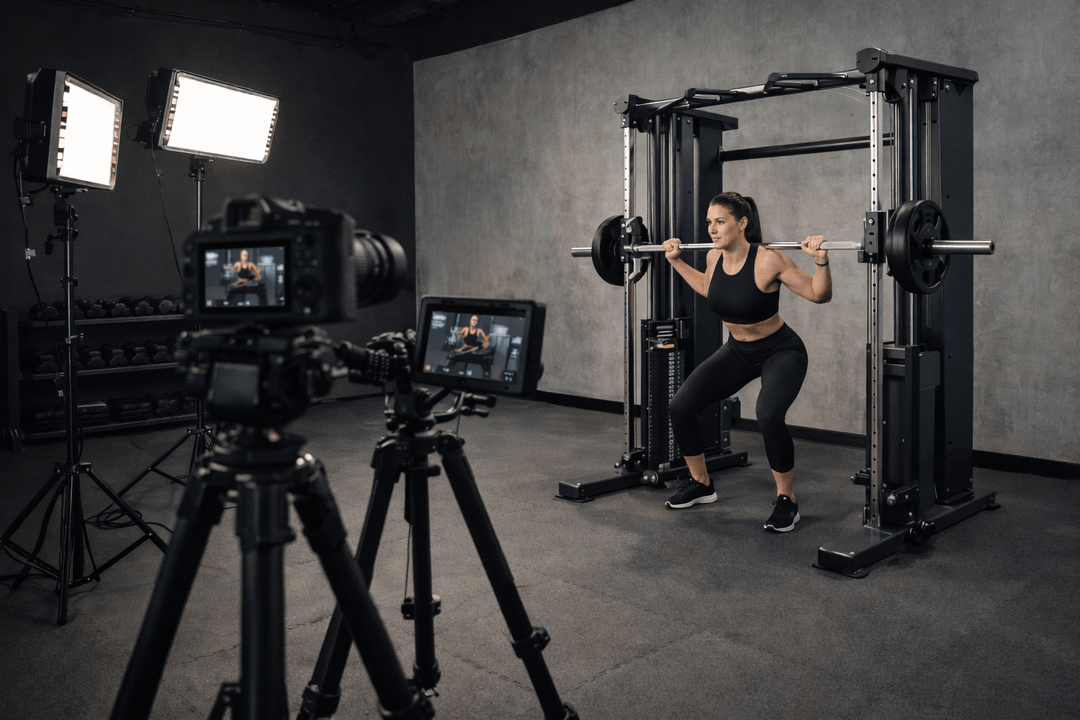
A new piece of fitness equipment without content is just metal and plastic waiting for someone to figure it out. That might sound harsh, but it reflects what the connected fitness market has made clear over the past several years: the hardware gets someone to buy. The content is what gets them to use it, keep it, and tell someone else about it. For equipment brands preparing a new product launch, the question is no longer whether to include a video library. The question is how to build one that actually drives adoption, reduces return rates, and positions the product as something worth coming back to.
This article is a practical playbook for OEM teams and equipment brand leaders who need to plan, produce, and distribute a launch-ready fitness video library. It covers what to film, how to structure the content around the buyer journey, how to run an efficient production shoot, and how to keep the library fresh after launch day.
What a Launch-Ready Video Library Actually Contains
Not all fitness video content serves the same purpose. A common mistake is treating a video library as a single category, filming a batch of workouts, and calling it done. In practice, a well-structured library is built around four distinct content types, each serving a different role in the product experience.
Onboarding Tutorials
These are the first videos a new owner sees. They cover setup, safety, basic machine functions, and how to get started with a first session. Onboarding tutorials should be short, clear, and completely non-intimidating. Think two to four minutes per video, with a calm coach walking through the machine's key features and demonstrating a first movement. For a smith machine, that means showing how to set the bar height, engage the safety catches, and perform a basic guided squat. For a leg press, it means adjusting the seat, positioning the feet, and completing a controlled set at light resistance. These tutorials directly reduce the friction between unboxing and first use, which is where a significant number of equipment returns originate.
Form and Technique Cues
Form cue videos are short, movement-specific clips that show proper execution from multiple camera angles. They're reference content rather than follow-along workouts. A buyer who wants to check their deadlift form on a smith machine or confirm their foot placement on a leg press pulls up a 60-to-90-second form cue, watches it, and gets back to training. This content type has an outsized impact on perceived product quality because it signals that the brand cares about safe, effective use of its equipment. It also serves a practical support function, reducing customer service inquiries about how to perform specific exercises.
Beginner Programs
Structured beginner programs take a new user from their first workout through their first two to four weeks of consistent training. These are coach-led, follow-along sessions organized into a progressive sequence. Each session builds on the last, introducing new movements and gradually increasing intensity. For an equipment brand, beginner programs are the single most important content type for day-30 and day-60 retention. A buyer who completes a structured program is dramatically more likely to continue using the product than one who sporadically does random exercises without guidance.
Advanced and Specialty Content
Once the beginner library establishes the foundation, advanced content extends the product's lifespan in the user's routine. This includes higher-intensity sessions, sport-specific programming, time-based challenges, and formats that combine the launched equipment with complementary movements. Advanced content is what keeps experienced users from outgrowing the product and looking elsewhere. It also gives the brand something to promote to existing owners over time, creating touchpoints that reinforce the product relationship well beyond the initial purchase.
Mapping Content to the Buyer Journey
The most effective video libraries aren't organized by difficulty level alone. They're mapped to the stages a buyer moves through from the moment they open the box to the point where the equipment becomes a permanent fixture in their routine.
The first stage is unboxing and setup. This is where onboarding tutorials live. A QR code printed inside the packaging that links directly to a setup walkthrough video creates an immediate bridge between the physical product and the digital content layer. It tells the buyer: this brand thought about your experience from the very first moment.
The second stage is the first workout. Within 24 to 48 hours of assembly, the buyer should be able to find and start a guided beginner session with zero friction. This is where email onboarding sequences matter. An automated email sent the day after purchase (or the day after the tracking number shows delivery) with a direct link to a "Your First Workout" video can meaningfully increase first-week engagement.
The third stage is progression. By week two or three, the buyer needs fresh content that acknowledges they've moved past the basics. This is where your structured programs, themed sessions, and progressive intensity sequences take over. If the library ends at "beginner," users plateau quickly and engagement drops. The content needs to grow with the user for at least the first 90 days to establish the kind of habitual use that prevents buyer's remorse and returns.
The fourth stage is long-term retention. Monthly content additions, seasonal challenges, and new program launches keep the library feeling alive rather than static. Users who see new content appearing regularly perceive the product as an ongoing investment rather than a one-time purchase. This is the stage where content directly supports subscription revenue for brands that bundle digital access with their hardware.
Minimum Viable Library Size by Equipment Type
One of the most common planning questions is "how much content do we actually need at launch?" The answer depends on the equipment category and the breadth of movements it supports, but there are practical baselines that consistently produce strong early engagement.
For a single-function machine like a leg press or a seated calf raise, a minimum launch library typically includes three to four onboarding and form cue videos, six to eight beginner sessions (enough for a two-week program at three to four sessions per week), and four to six intermediate sessions. That puts you in the range of 15 to 20 total pieces of content, which is enough to carry a user through their first month with structure and variety.
For a multi-function machine like a smith machine, a functional trainer, or a cable crossover system, the library needs to be larger because the movement variety is significantly greater. A strong launch target is five to six onboarding and form cue videos covering the most common exercises, 10 to 12 beginner sessions, six to eight intermediate sessions, and four to six advanced sessions. That puts the total in the 25 to 35 range, which provides enough depth for six to eight weeks of structured use.
For cardio equipment like treadmills, bikes, rowers, and ellipticals, the content math shifts because sessions tend to be longer and the format leans more heavily toward coach-led follow-along classes rather than tutorials. A launch library of 20 to 30 classes across beginner, intermediate, and advanced tiers, supplemented by three to five onboarding videos, is a solid starting point. Cardio content also benefits from format variety: interval sessions, endurance rides, themed classes, and recovery-focused sessions all contribute to keeping users engaged across different training days.
Planning the Shoot: Scripts, Casting, Set Design, and Audio
A video library shoot for a new equipment launch is a concentrated production effort that requires detailed planning well before cameras roll. The difference between content that looks premium and content that looks like it was filmed in a garage comes down to preparation in four areas.
Scripts and Session Outlines
Every session should have a written outline that includes the warm-up structure, exercise sequence, set and rep counts, coaching cue callouts, transition timing, and cooldown. Full word-for-word scripts aren't necessary for experienced fitness coaches, but a detailed outline ensures consistency across the library and prevents the kind of improvised rambling that makes content feel unprofessional. For onboarding tutorials and form cue videos, tighter scripting is appropriate because accuracy and clarity are paramount.
Coach Casting
The coach is the face and voice of the entire library, which makes casting one of the highest-leverage decisions in the production process. The right coach projects warmth, authority, and credibility without coming across as intimidating or performative. They need to be able to cue movements clearly, maintain energy across a full day of filming, and adapt their delivery for different content types (a beginner tutorial requires a different tone than an advanced HIIT session). For equipment brands that don't have an existing talent roster, working with a production partner that manages talent sourcing and auditions can significantly reduce risk and speed up the casting timeline.
Set Design and Lighting
The set should be clean, well-lit, and branded without being cluttered. A neutral backdrop with the brand's color palette subtly incorporated (through flooring, wall accents, or equipment finish) creates visual consistency across the library. Lighting is the single biggest differentiator between amateur and professional fitness content. Three-point lighting setups with soft, diffused key lights eliminate harsh shadows and ensure the coach and equipment are clearly visible from every camera angle. Overhead and side lighting should be bright enough to show movement detail without creating glare on metal surfaces, which is a common issue when filming with strength equipment.
Audio
Audio quality is where many first-time fitness content producers underinvest, and it's immediately noticeable to viewers. A wireless lavalier microphone on the coach captures clear vocal instruction regardless of their position relative to the camera. Room acoustics matter as well. Hard, reflective surfaces (concrete floors, bare walls) create echo that degrades audio quality, so the filming space should include some acoustic treatment or soft surfaces to absorb sound. Music licensing is a separate but critical consideration. Every piece of music used in the library needs to be properly licensed for the intended distribution channels, whether that's an app, a website, email delivery, or retail display screens.
Why Storage and Space Matter for Large Equipment
This is the operational detail that catches many brands off guard. Filming content for a leg press, smith machine, or cable system means the equipment needs to be physically present in the studio for the duration of the shoot. For large, heavy machines that require assembly and calibration, this introduces logistics that don't exist when filming bodyweight or dumbbell content.
The production facility needs enough floor space to accommodate the equipment with room for camera movement around it, adequate load-bearing capacity for heavy machines, and the ability to stage multiple setups if filming content for more than one product. Brands also need to plan for ongoing access to the equipment for content updates and refreshes. If the production studio doesn't have the equipment on-site between shoots, each refresh cycle involves shipping, assembly, filming, and disassembly, which adds cost and lead time. This is one of the practical reasons why long-term production partnerships tend to be more efficient than one-off project engagements for equipment brands with ongoing content needs.
Quality Benchmarks That Separate Premium From Amateur
Buyers can tell the difference between premium fitness content and a hastily filmed demo reel. The benchmarks that matter most are camera angles, coaching quality, pacing, and safety integration.
Camera angles should include a primary wide shot that shows the full body and equipment in frame, a secondary angle (typically 45 degrees) that reveals depth and range of motion, and occasional close-ups for hand placement, foot positioning, and machine adjustment points. Cutting between angles keeps the visual experience dynamic and provides the instructional clarity that a single static shot cannot.
Coaching quality means more than a pleasant voice. The coach should anticipate common form errors and address them proactively during the session. Cues like "if you feel this in your lower back, check that your hips are pressed firmly against the pad" prevent injuries and demonstrate that the content was designed with the end user's safety in mind.
Pacing is about giving the viewer enough time to set up, perform the movement, and transition without feeling rushed or bored. Beginner content should pace slower with longer rest periods and more verbal encouragement. Advanced content can move faster with tighter transitions. Getting the pacing right for each level is what makes a library feel professionally produced rather than one-size-fits-all.
Safety integration means every session includes a brief safety check at the beginning (is the machine locked, are the safeties set, is the area clear) and appropriate disclaimers. This isn't just a liability consideration. It builds trust with the user and reinforces the brand's commitment to a responsible product experience.
Distribution: Getting Content in Front of Buyers at the Right Moment
A premium video library that no one can find is a wasted investment. Distribution planning should be mapped before the shoot, not after, because it affects file formats, aspect ratios, and metadata requirements.
The primary distribution channel for most equipment brands is the companion app or platform. Content should be organized by type (tutorials, programs, individual sessions), tagged by difficulty level and duration, and searchable by muscle group or equipment setting. If the brand doesn't have its own app infrastructure, licensing a platform or content library from a partner with an existing delivery system is a faster path to launch than building from scratch.
QR codes in packaging create an immediate content bridge at the point of unboxing. A printed card or sticker that links directly to the onboarding video library costs almost nothing to produce and delivers an outsized impact on first-use rates. It converts a passive unboxing experience into an active one.
Email onboarding sequences drip content to new buyers over their first 30 to 60 days. A well-designed sequence sends a setup video on day one, a first workout prompt on day three, a "try your first program" nudge on day seven, and weekly content highlights for the following month. This cadence keeps the product top of mind and drives consistent early engagement, which is the strongest predictor of long-term retention.
Retail and e-commerce pages should embed preview clips from the library as part of the product listing. A buyer researching a smith machine who sees a 30-second preview of a coach leading a guided session on that exact machine is getting a visceral demonstration of what ownership looks and feels like. This is content doing double duty as both product marketing and post-purchase support.
The 90-Day Refresh Plan
A video library that never changes signals to users that the brand has moved on. A library that grows tells users the brand is still invested in their experience. The most effective approach is a 90-day refresh cadence that adds new content monthly and introduces a new program or challenge quarterly.
In month one post-launch, add three to five new sessions that fill gaps identified by early user behavior. If completion data shows that beginner content gets heavy use but intermediate sessions have low starts, the gap is a transitional "bridge" program that helps users move from beginner to intermediate with confidence. If a particular exercise or format shows unusually high engagement, produce more content in that vein.
In month two, introduce a themed mini-challenge. A "14-Day Strength Foundations" challenge or a "5 Workouts in 5 Days" quick-start series gives existing users a reason to re-engage and provides new buyers with a structured entry point that feels current rather than day-one launch content.
In month three, release a new full program. This is the anchor content piece for the quarter. A four-week progressive program with a distinct theme (hypertrophy focus, functional strength, athletic performance) extends the library's depth meaningfully and gives the brand fresh material for marketing, email campaigns, and social media promotion.
After the initial 90 days, this cadence becomes the ongoing content operations rhythm: monthly session additions, quarterly program launches, and seasonal or promotional content tied to key retail moments.
Example Libraries: Smith Machine and Leg Press
To make this concrete, here's what a launch-ready library looks like for two common strength equipment categories.
Smith Machine Launch Library
A smith machine supports dozens of exercises across squat, press, row, lunge, and hip hinge patterns, which means the library needs to reflect that versatility. A strong launch package includes a three-part onboarding series (machine overview, safety features, and a guided first workout), six form cue videos covering the most common movements (back squat, front squat, bench press, overhead press, bent-over row, and Romanian deadlift), a four-week beginner program with three sessions per week, a two-week intermediate program, and four standalone advanced sessions. That totals roughly 30 pieces of content, enough to carry a new owner through their first six to eight weeks with structured guidance.
Leg Press Launch Library
A leg press has a narrower movement vocabulary, so the library can be more focused. The launch package includes a two-part onboarding series (machine setup and first session), four form cue videos (standard press, narrow stance, wide stance, and single-leg press), a three-week beginner program at two to three sessions per week, a two-week intermediate program, and three advanced sessions that incorporate tempo variations and partial-range work. That puts the total at roughly 18 to 20 pieces, which is right-sized for the equipment's scope without over-producing content that would go unused.
Selecting a Production Partner: A Decision Checklist
Not every production company is equipped to handle fitness content at the level an equipment launch requires. The checklist below covers the criteria that matter most when evaluating potential partners.
Fitness production specialization is the first filter. A generalist video production house can make things look good, but fitness content requires specific knowledge of movement cueing, exercise safety, session pacing, and talent management that general production teams rarely possess. Ask whether the production partner has a dedicated studio optimized for fitness filming and a track record with equipment-based content specifically.
Talent sourcing and audition capability matters because the coach makes or breaks the content. A production partner that maintains a roster of vetted fitness talent and runs structured auditions will deliver stronger on-screen results than one that expects the brand to supply its own presenter.
Studio capacity for large equipment is a practical requirement that eliminates many smaller production houses. If your product weighs several hundred pounds and requires assembly, the facility needs to accommodate that without compromising camera angles or lighting quality.
End-to-end production scope means the partner handles program design, scripting, casting, filming, editing, motion graphics, quality assurance, and file delivery. Brands that piece together these functions across multiple vendors introduce coordination risk and timeline delays that a single integrated partner avoids.
Content refresh capability separates a one-time vendor from a long-term production partner. If the partner can support your 90-day refresh cadence and scale production up as the library grows, that continuity protects brand consistency and reduces onboarding overhead with each new shoot cycle.
Licensing and rights clarity should be established upfront. Understand exactly what you own, where you can distribute, and how music licensing is handled before production begins. Ambiguity in content rights creates legal and operational risk that compounds as the library scales.
The Content Is the Product Experience
Equipment brands that treat video content as a marketing afterthought consistently underperform brands that treat it as a core component of the product itself. The machine is what the buyer pays for. The content is what the buyer experiences every time they use it. When that content is well-produced, thoughtfully structured, and regularly refreshed, it transforms a piece of equipment from a purchase into a platform, and a one-time buyer into a long-term user.
The brands getting this right aren't necessarily the ones with the biggest budgets. They're the ones that plan their content library with the same rigor they apply to product engineering, source production partners who understand both fitness and film, and commit to an ongoing content rhythm that keeps the library growing alongside their user base. That's the formula. And it starts well before the first camera rolls.
Fitscope provides general fitness content for educational and entertainment purposes and does not provide medical, legal, or professional advice. Always consult a qualified professional before beginning a new exercise program. Results vary and workouts should be modified to your ability and comfort level.

Commercial Subscription
Allows Fitscope classes to be used in a commercial gym or boutique studio (1 location) with up to 500 members. Multiple simultaneous users enabled. Lets Talk!
© Fitscope Technologies LLC, 2023
Powered by  Fitcaster