
Fitscope Studio
April 28, 2026, 1 min
White Label Fitness Video Content: What It Is and How Brands Use It
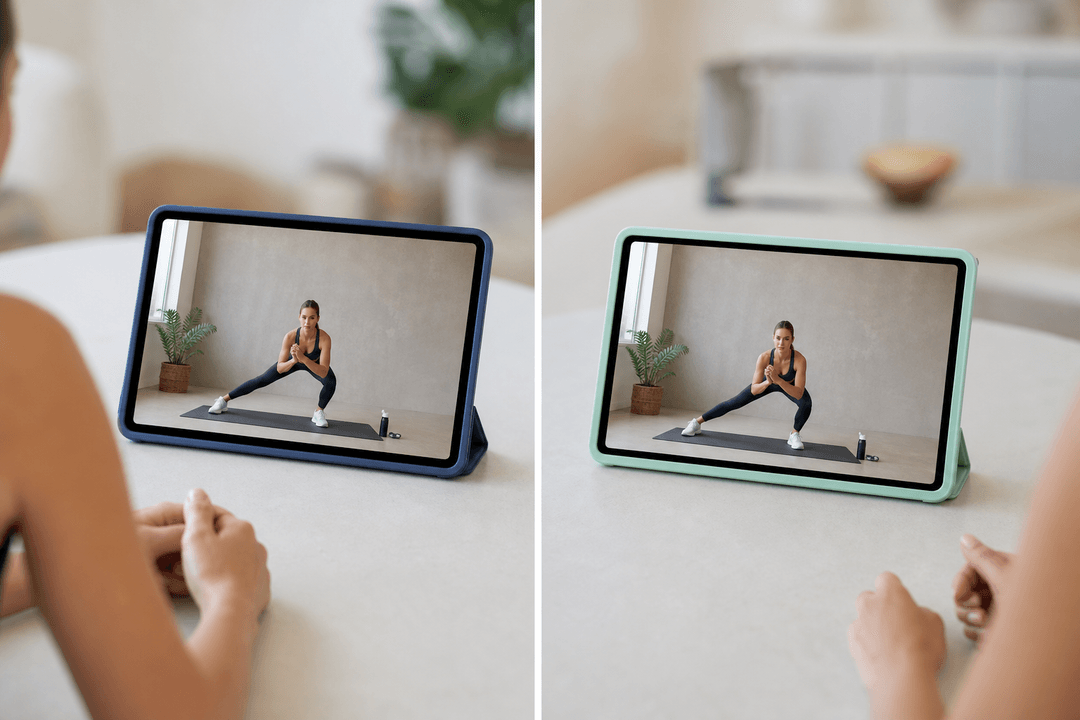
Building a library of high-quality fitness video content from scratch takes time, money, and production infrastructure that most companies simply do not have in place. For businesses that need to launch quickly, serve a broad range of fitness modalities, and present polished programming under their own brand, white label fitness video content offers a practical path forward. This article explains what the term actually means, how it differs from standard content licensing, who uses it, and how to decide whether it fits your business model.
What White Label Fitness Video Content Actually Means
White label fitness video content is pre-produced workout and wellness video content that a buyer can license and present under their own brand, as if they created it. The original producer's identity is removed, or never present in the finished files, and the licensing partner applies their own logo, intro sequences, color palette, and any other brand elements before delivering it to their end users.
The term "white label" comes from manufacturing, where a blank-label product is produced by one company and packaged by another for retail under a different brand. In the fitness content world, the same logic applies. A production studio films, edits, and quality-controls a library of workout classes. A fitness app, gym chain, or equipment manufacturer then licenses those videos, applies their brand, and distributes the content to their audience as their own programming offering.
This is meaningfully different from standard content licensing, and that distinction is worth understanding clearly before you begin any procurement conversation. Standard licensing grants usage rights. It permits you to show or distribute content, but typically under the original producer's branding or with minimal modification. White label licensing grants branding rights in addition to usage rights. You are permitted to strip the source branding and apply your own, making the content appear as a native part of your platform or product. The operational difference is significant: one delivers someone else's programming to your audience, and the other delivers your programming to your audience, even though the underlying content was produced externally.
A closely related term worth separating is private label. Private label content is typically produced specifically for a single buyer from the outset, with that buyer's brand baked in at the production stage. White label content, by contrast, is generally produced as a neutral or unbranded asset first, then made available to multiple buyers for branding. Private label is more exclusive by design; white label is more scalable for the provider and typically more affordable for the buyer.
Who Uses White Label Fitness Video Content
The businesses that benefit most from white label fitness content share a common profile: they have an audience that expects quality workout programming, but their core business model is not content production. The demand for branded fitness content spans a wide range of sectors, and the buyer profiles are worth examining individually because the use case shapes what a provider relationship needs to deliver.
Fitness apps and digital platforms are among the most frequent buyers. A new app launching in the connected fitness space needs immediate library depth to compete with established platforms. Licensing a white label content library allows a development team to launch with hundreds of classes across multiple modalities on day one, rather than spending a year and significant capital building that content in-house. The app presents the programming under its own brand, and users experience it as native content.
Connected fitness equipment manufacturers face a parallel challenge. Hardware companies that produce treadmills, stationary bikes, rowing machines, or strength equipment increasingly need to offer a companion content experience. Producing that content internally requires building a studio operation that sits entirely outside their core manufacturing competency. White label fitness video content, particularly when it is built around the specific equipment modalities the manufacturer produces, allows those brands to offer a polished content layer without staffing a production team. Fitscope works directly with equipment manufacturers navigating exactly this challenge, building content programs designed for the specific machines their customers own.
Commercial gyms and boutique studios use white label content to extend their programming beyond the physical floor. A gym that wants to offer its members an on-demand library accessible at home, or a hospitality brand equipping a hotel fitness center with quality programming, can license white label content and present it as part of a branded member experience. This extends perceived value without requiring live class schedules or instructor staffing for digital programming.
Corporate wellness platforms represent a growing buyer segment. Employers and benefit providers building employee wellness programs need varied, accessible fitness content that fits a wide range of physical ability levels and time constraints. White label content lets these platforms curate a wellness library under their own brand, creating a more cohesive experience for employees and reinforcing the platform's identity rather than surfacing a third-party provider's name in every workout session.
What White Labeling Typically Includes
When a provider offers white label fitness content, the scope of what that arrangement actually covers varies considerably. Buyers should understand the components that a complete package should address, because "white label" can mean different things at different price points and from different providers.
At the most basic level, white labeling means the source producer's branding is removed from the video files. This includes removing on-screen instructor watermarks, lower-third graphics that identify the producing studio, and any branded intro or outro sequences. What replaces that removed branding depends on the arrangement. Some providers deliver clean, unbranded files and leave all branding application to the buyer. Others offer co-production of branded intro and outro sequences, custom thumbnail creation, and even player-level branding if the content is delivered through a managed platform.
Metadata is an often-overlooked component of a white label package. A useful content library requires titles, descriptions, tags, modality categories, equipment requirements, difficulty levels, and instructor attribution formatted for the buyer's platform. Providers that deliver clean metadata alongside video assets reduce a significant amount of post-licensing work. Buyers should also ask about subtitle and multi-language support, particularly if they serve international audiences or have accessibility requirements.
File specifications matter for deployment. A provider that delivers only a single resolution or a single aspect ratio may create complications for buyers distributing across mobile apps, connected equipment consoles, and web players simultaneously. HD delivery at a minimum is standard, and buyers serving premium hardware or large-screen experiences may require higher-resolution options. Asking about format specifications before signing a licensing agreement avoids friction at the deployment stage.
Types of Content Available as White Label
White label fitness content libraries vary considerably in depth, and understanding the taxonomy helps buyers assess whether a given library actually serves their audience's needs. The most mature libraries organize content across several distinct categories.
On-demand workout classes are the core offering for most libraries. These are complete, instructor-led sessions ranging from 10 to 60 minutes, structured as finished programming rather than raw footage. Modality coverage across a well-stocked library typically includes cycling, treadmill running and walking, rowing, strength training, HIIT, yoga, Pilates, mobility and stretching, and low-impact cardio. Library depth within each modality matters as much as breadth across modalities: a library with 500 cycling classes but only 20 strength classes may not serve a corporate wellness platform whose employee base is predominantly beginners seeking variety.
Exercise demonstration libraries are a separate and frequently undervalued content type. These are short, isolated movement clips showing correct form for individual exercises, without music, narration-dependent pacing, or full class structure. They are particularly useful for strength training platforms and any application where users need to reference technique independently. These clips are highly versatile and can be assembled into custom program flows by the buyer.
Short-form content has become increasingly relevant as user behavior has shifted toward sessions of 10 minutes or less, particularly for mobile audiences. A white label library that includes quick-format sessions alongside full-length classes gives buyers the flexibility to serve both users who want a complete workout and users who want a brief movement break during a workday.
Wellness content is an expanding category within white label libraries. Nutrition guidance, recovery programming, mindfulness and meditation sessions, and mobility-focused content are increasingly bundled alongside traditional fitness classes. For corporate wellness platforms and health-adjacent applications, this breadth supports a more complete user experience and reduces the need to license from multiple providers.
Advantages of White Label Fitness Content
The most consistently cited advantage is speed to market. Producing original fitness content at the volume needed to sustain a competitive platform requires casting, scheduling, location or studio access, filming, editing, quality review, and metadata preparation. That process takes months for a meaningful library volume, and the ongoing production cadence required to keep content fresh is a significant operational commitment. A white label arrangement compresses that timeline considerably. A buyer can evaluate a library, agree on terms, complete branding application, and launch with substantial content depth within weeks rather than quarters.
Cost structure is the second major advantage. Original production carries both upfront capital costs and recurring costs for talent, studio time, and post-production. White label licensing converts much of that capital expenditure into a predictable operational cost, typically structured as a per-class fee, a flat-fee subscription to a library tier, or a full-library access model with optional exclusivity premiums. Even accounting for licensing fees over multiple years, most buyers find that white label content costs less than equivalent original production, particularly at the volume needed to serve a broad audience across many modalities.
Content quality is a less obvious but meaningful advantage. Established white label providers have refined their production processes, instructor curation standards, and quality control workflows over many productions. A buyer licensing from a proven library is accessing content that has already been tested and iterated. This is particularly relevant for buyers entering the fitness content space for the first time, who may not have the internal expertise to evaluate production quality or manage the variables that determine whether instructor-led content actually performs well with an audience.
Library breadth also supports long-term engagement in ways that are difficult to achieve through original production alone. Fitness video licensing from a provider with strong modality coverage means users can move across class types as their interests and ability levels evolve, which supports retention across a longer relationship with the platform.
Limitations and Honest Tradeoffs
The most significant practical limitation of non-exclusive white label licensing is shared content. When a library is licensed to multiple buyers, different platforms may be running the same underlying workout videos under different brand names. For most business models this is manageable, particularly when branding is applied with enough depth that the user experience feels native to the platform. However, for brands where instructor identity is a core differentiator, or where a specific instructor relationship is central to the brand proposition, shared content creates a real conflict. A user who happens to encounter the same instructor through two different platforms will notice. Buyers for whom this matters should either negotiate exclusivity or plan to mix white label content with original production to create genuinely differentiated programming.
Instructor selection is another tradeoff. White label licensing means accepting the talent choices made by the producing studio. Buyers cannot direct casting, request specific instructor demographics, or shape the coaching style beyond what the provider already offers. For brands with a strongly defined voice and audience culture, this may require supplementing with original production even when white label content covers most functional needs.
Dependency on the provider's update cadence is a longer-term consideration. A library that was fresh at launch will feel dated if the provider does not add new content consistently. Buyers should ask providers directly about their content addition schedule and understand whether older content remains in the library or is retired. A library that stagnates is a retention risk, because users who exhaust available programming will seek alternatives.
Finally, customization depth has limits. While reputable white label providers offer meaningful branding application, there are always elements of the content that cannot be changed post-production. The training environment, production aesthetic, music selection, instructor coaching style, and content structure were determined when the original files were produced. Buyers who need a very specific visual language or a production style that matches an existing content portfolio may find that no available library provides a close enough match, and custom production becomes the more appropriate path.
Pricing Models: What to Expect
Pricing for white label fitness content is one of the least transparent areas of the market, and most providers do not publish rate cards publicly. Understanding the common structures helps buyers enter procurement conversations with the right questions.
The most common models in the market are subscription access to a defined library tier, per-class or per-download fees for selective licensing, flat-fee packages for a specific volume of content assets, and exclusivity premiums layered on top of any of the above. Subscription models tend to favor buyers with broad content needs across many modalities, because the per-unit cost decreases as usage scales. Per-class models suit buyers with narrower, more specific content needs who do not require large library depth. Flat-fee packages are common for buyers who want a defined content batch for a specific launch or campaign rather than an ongoing licensing relationship.
Exclusivity premiums are applied when a buyer wants to prevent the same content from being licensed to competitors. Regional exclusivity means the content cannot be licensed to another company operating in the same geography. Category exclusivity means it cannot be licensed to another company in the same industry vertical. Exclusivity at either level commands a meaningful cost premium because the provider is forgoing other licensing revenue for that content. Buyers who operate in competitive markets where content differentiation matters should budget for exclusivity from the outset rather than negotiating it as an afterthought.
How to Evaluate a White Label Fitness Content Provider
The evaluation criteria that matter most when selecting a white label fitness content provider can be organized as a set of concrete questions to put to any provider in your shortlist. Generic assessments of "quality" and "variety" are insufficient for a decision of this scope. The following questions surface the information that actually determines whether a provider relationship will perform over time.
- What is the library size and modality breakdown? Ask for specific class counts by category, not aggregate totals. A library with 800 classes is only useful if the distribution across modalities matches your audience's actual usage patterns. A platform serving older adults needs different depth in low-impact and mobility content than a platform serving competitive athletes.
- Are instructors certified, and by which bodies? Instructor credentialing matters for credibility with audiences, for corporate wellness procurement requirements, and for any platform operating in health-adjacent environments. Ask for specific certifications and confirm that content is reviewed for accuracy before inclusion in the library.
- What branding elements can be customized? Establish specifically whether your arrangement includes logo placement only, or extends to custom intro and outro sequences, thumbnail branding, metadata rewriting, and player-level customization if the content is delivered through a managed platform.
- What file formats and resolutions are available for delivery? Confirm that the provider can deliver the formats your infrastructure requires. Mismatches in resolution, codec, or aspect ratio create rework at the deployment stage that is avoidable with upfront clarity.
- What is the content update cadence? Ask how frequently new content is added to the library, what happens to older content over time, and whether you have any input into which categories receive new additions.
- Is exclusivity available, and at what scope? Understand whether the provider offers regional, category, or content-specific exclusivity, and what premium that commands. If exclusivity is not available, ask how many other licensees are actively using the same content in your market.
White Label, Licensed, or Custom: A Decision Framework
The choice between white label content, standard licensed content, and custom original production is not a question of which option is inherently better. It is a question of which option fits your business model, timeline, budget, and content strategy.
White label fitness content is the strongest fit when your team has no production capacity and no near-term plan to build it; when your launch timeline requires content availability within weeks rather than months; when your audience needs broad modality coverage rather than depth in a single category; and when your brand identity is strong enough that branding application will make licensed content feel native to your platform. It is also appropriate when content cost efficiency is a priority and original production costs are not justified by the scale of your current audience.
Standard licensed content without branding rights may be sufficient when your platform does not require the content to appear as your own, such as a marketplace or aggregator model where users expect to encounter multiple brands. In this model, the content producer's identity adds rather than detracts from the experience.
Custom original production is the right choice when instructor identity is a core component of your brand value and cannot be replicated from an existing library; when your content strategy requires formats, environments, or equipment integrations not available from any current provider; when exclusivity is non-negotiable and exclusivity premiums on white label content would exceed the cost of original production at your required volume; or when your audience's expectations are specific enough that no available library offers a close enough match. Custom fitness video production carries higher upfront investment, but it delivers content that is genuinely differentiated and cannot be found on any competing platform.
For many growing platforms, the practical answer involves both. White label content provides immediate library depth and cost efficiency across foundational modalities, while selective original production builds proprietary assets in the categories most central to the brand's identity. This hybrid approach is common among established digital fitness businesses that have matured past the launch phase and are investing in content differentiation.
According to Grand View Research , the global fitness app market was valued at approximately $12.12 billion in 2025 and is projected to reach $33.58 billion by 2033. That trajectory reflects a sustained shift in how people access fitness programming, and it signals that the demand for scalable, high-quality digital fitness content will continue to grow. For brands entering or expanding in this space, the question of how to source that content is not a minor operational detail. It is a strategic decision with meaningful implications for launch speed, audience experience, brand perception, and long-term cost structure. White label fitness content is a well-established and genuinely practical answer for a wide range of buyer profiles, and understanding the mechanics of how it works is the starting point for making a well-informed choice.
About Fitscope
Fitscope is a connected fitness content studio and production partner specializing in equipment-based workout programming. We produce and license a library of trainer-led, studio-quality fitness classes built around real equipment, including cycling, rowing, treadmill, elliptical, and strength modalities. Our B2B content and production services are designed for fitness apps, equipment manufacturers, commercial gyms, hospitality operators, and corporate wellness platforms that need high-quality content delivered at commercial scale.
Whether your business needs a licensable content library, custom-produced branded workouts, or a white-label platform solution, Fitscope has the production infrastructure and content depth to support a professional rollout. We work with partners to establish content programs that reflect their brand, serve their audience, and meet the delivery specifications their platform requires.
To explore what a content licensing or production partnership could look like for your business, reach out to our team to start a conversation about your specific needs and use case.

Commercial Subscription
Allows Fitscope classes to be used in a commercial gym or boutique studio (1 location) with up to 500 members. Multiple simultaneous users enabled. Lets Talk!

© Fitscope Technologies LLC, 2023
Powered by  Fitcaster